

Bitcoin’s latest upward move has sparked debate among market participants, and some believe the rally may have little to do with the purchase announcement that received the most attention. While the acquisition is generally viewed as constructive for the broader market, it is not necessarily the type of development that would justify a significant upward move in Bitcoin price.
Why The Latest Purchase May Not Be Driving Bitcoin Rally
The Bitcoin’s recent move higher is being misinterpreted as a direct reaction to purchase news, when in reality the drivers appear to be more technical in nature. Crypto analyst Aylo has explained on X that the BTC bounce is likely the result of an oversold market finding relief after sweeping key February lows.
Another factor supporting the move higher is the easing of concerns surrounding Strategy and its Bitcoin holdings. The company’s recent sale of a relatively small 32 BTC sparked fears that it could become a larger seller in the future.
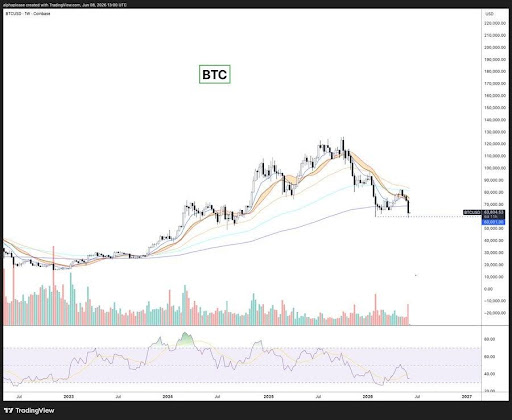
Aylo suggests that while the current low may hold in the near term, it remains plausible that BTC could form a slightly lower low in June before a rally, particularly if the broader equity markets experience further weakness. Any deeper stock market shakeout could temporarily drag the price lower before a more sustained recovery begins. This level will be temporary before Bitcoin sees a low later in the year.
Furthermore, the fear that Michael Saylor and Strategy may be forced to liquidate a significant portion of their BTC holdings is likely overstated. The company may need to sell limited amounts to meet specific obligations, but the narrative that a major liquidation event from their supply will be driven more by bearish sentiment.
What The Recent Breakdown Could Mean For The Market
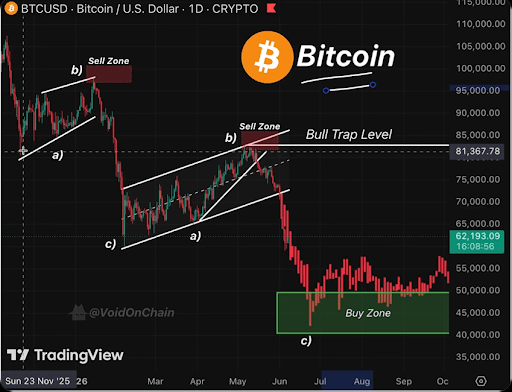
Bitcoin’s recent price action appears to be following a market structure that has played out before during previous corrective phases. A crypto trader known as Max Trades pointed out that roughly a month ago, BTC was entering a distribution phase of this pattern, and the outlook has since played out with notable accuracy.
In this bear market, BTC first formed an accumulation range, where price consolidated before breaking higher and sweeping out the liquidity above the previous highs. However, instead of continuing its upward trajectory, the asset price has transitioned into distribution. Since then, BTC has experienced a significant decline, falling more than 20% from its previous highs.
According to Max Trades, what makes the current setup particularly noteworthy is the comparison to a previous distribution phase that ultimately resulted in substantially deeper downside after the initial breakdown. If the current structure continues to mirror that historical pattern, it could imply that the recent decline is not yet complete.